• Skip to primary navigation
  • Skip to main content

Firefly Meadows Farm:

  • Our Story
  • Products & Pricing
    • Raw Honey
    • Green Cleaning Supplies
  • How to Purchase
  • Buy Honey Bees
  • Queen Rearing Calendar
  • Connect
  • Blog
  • Shop
  • Cart

Josiah

How Can I Find Grass Fed Beef Near Me?

August 30, 2019 by Josiah Leave a Comment

Occasionally I’m asked by friends “How can I find grass fed beef near me?” Often, we receive requests to ship beef, but there may be better options if you can locate a local farmer you trust.  Here is one way to find a local farmer where you can buy grass fed beef.

One option is to skip the local farmer and buy grass fed beef in your grocery store.  As the health benefits of grass fed beef have become more well known, many grocery stores have started stocking grass fed beef.  This can often be your most convenient option.  However, there are some things to watch out for if purchasing grass fed beef in a grocery store.  First, there is sometimes less than truthful marketing.  For example, a lot of beef that is finished on grain is marketed as grass fed.  This is often conventional beef with a “grass-fed” label added to it and is probably not what you are looking for.  In fact, the conventional way to produce beef is to raise it on grass and pasture and then finish the animals on grain.  These animals do technically eat grass at some point in their lives, but unfortunately the nutritional profile of beef changes rapidly if finished on grain.  Finishing animals for even a few days on grain before butcher can dramatically change the nutrient profile of the meat. If you are want true grass fed beef, you should look for 100% grass fed beef.  If you want to know the details of how the animals were raised, grocery store beef is likely not your best option.  Finding a local farmer near you is a great way to learn exactly how your grass fed beef was raised.

How do you find a local 100% grass fed beef farmer?  If you don’t have any friends or family raising 100% grass fed beef the I recommend two online directories: Local Harvest or Eat Wild.  These directories allow you to quickly find the closest farmers and what they are selling.

To use Local Harvest type “grass fed beef” in the search bar at the top as well as your zip code.  This will give you a list of farmers near you that sell grass fed beef.  To learn more about the farm, click on the listing.  Listings will often have contact information so you can reach out to the farmer to get more information.

To find grass fed beef on Eat Wild click on “Shop for Local Grassfed Meat, Eggs & Dairy” on the left hand side of the site.  From there, you can click on the state where you live.  Then click on the map twice to see where each farm is located in your state.  Zoom into the area of your state closest to you and look for red pushpins which signify farms.  Click on the pushpins nearest you to learn about the farm, the products they offer and how to contact them.  Eat Wild also has some great information on their site.  You can learn about the basics of grass fed, health benefits of grass fed, and grass fed environmental benefits.

I hope this article helps you find local, high quality, grass fed beef.  Finding a local farmer you can trust is a great way to source the highest quality, nutritious food, support your local farmer, and benefit the environment.  Good luck on your search!
Filed Under: Uncategorized

Why I Move My Cattle Daily

August 16, 2019 by Josiah 3 Comments

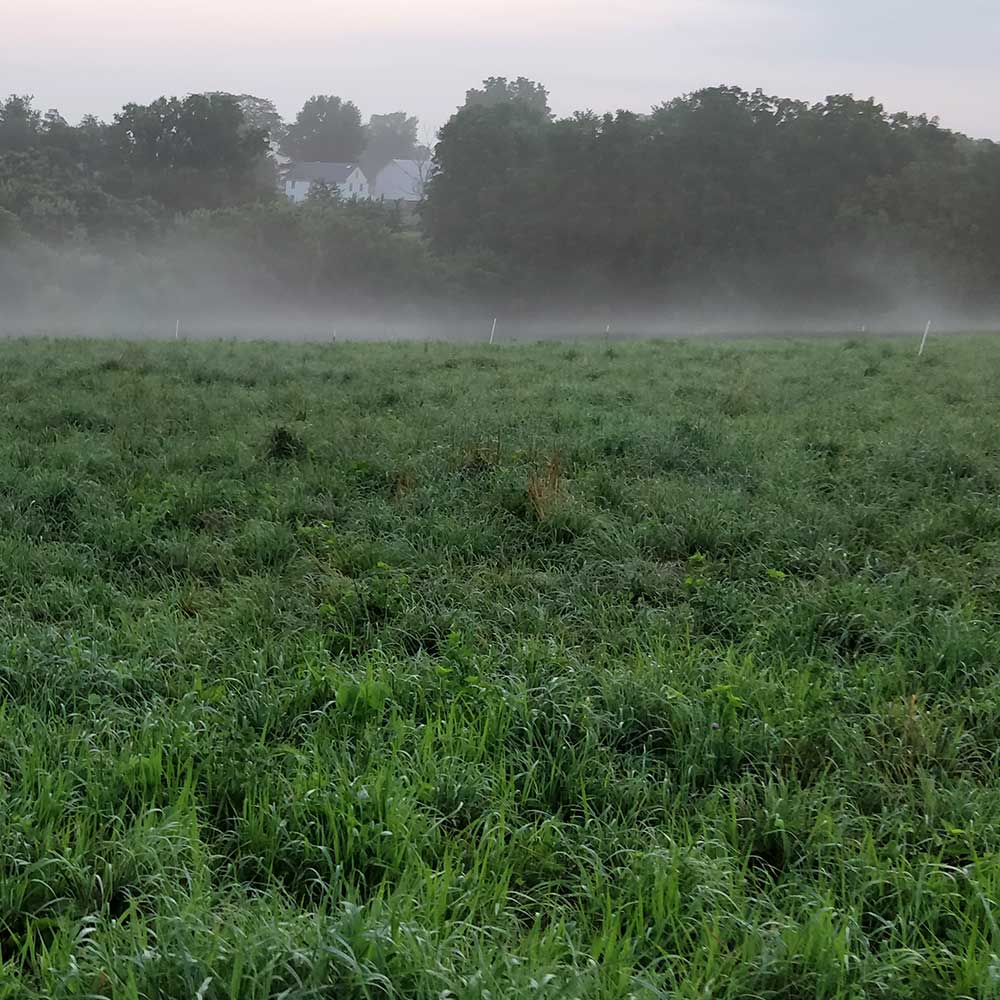
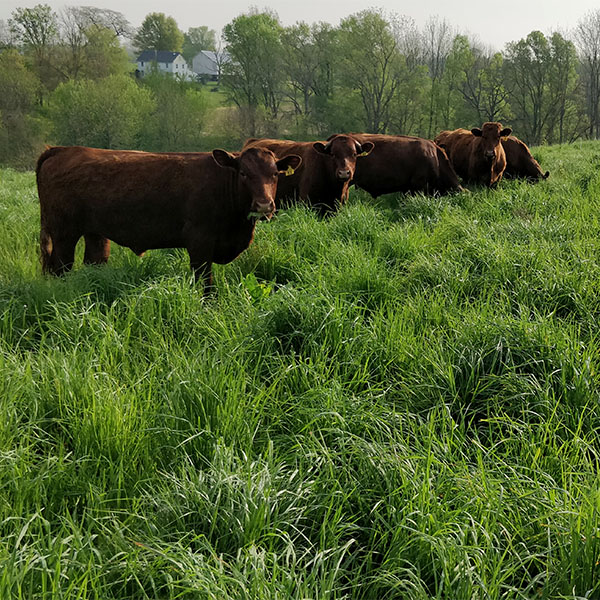
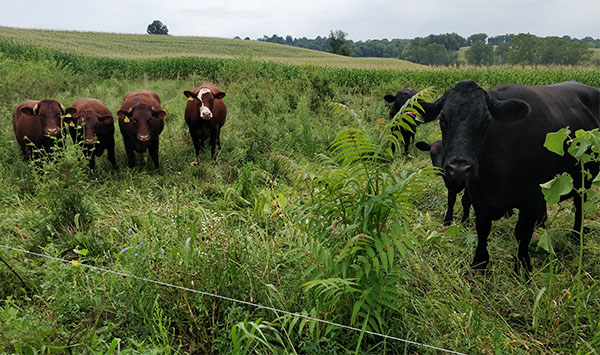
Every day with few exceptions I move my herd of cattle to new pasture.  This mean that each day I setup a new fence, move the cattle water bowl (and clean it out if necessary), move the mineral feeder and move my herd into this new pasture area.

Many people wonder why I go to the trouble of moving my cattle daily. It’s a lot of work to move cattle each day rather than leave them in one larger area, but there are important reasons to take the time to move your herd each day.

Daily moves improve the quality of the pasture over time.

Good pasture requires grazing in order to be healthy, but if the animals are given constant access to the full pasture they will overgraze plants.  This means that they will choose the most valuable plants and graze them repeatedly without letting the plants recover.  Eventually these valuable plants die out and the pasture quality diminishes over time.

Moving cattle daily also improves the pasture quality by distributing the animal impact more evenly.  Many people think that animal impact is negative.  However, properly managed herds of animals are critical to improve pasture health.  By moving animals daily manure is distributed more evenly providing a natural fertilizer to the pasture.  Daily moves also help animals to trample uneaten, less desirable plants.  This trampling of plant material into the soil helps to feed soil life improving overall soil and pasture health.  Without daily moves cattle tend to favor certain spots which become overgrazed and over fertilized to the detriment of that area as well as the other areas of the pasture.

Daily moves improve the health of the animals.

Daily moves mimic the natural behavior of large grazing herds in the wild.  One reason this leads to better health outcomes, is that the animals have a large diversity of plants to choose from when grazing as discussed above.  Daily moves lead to increased species diversity in the pasture allowing animals to easily meet their nutrition needs.

Also important for the health of the animals, is the daily moving away from fly and parasite pressure.  Because the herd is constantly moving away from it’s own manure, they end up moving away from flies that will hatch over the coming days.  Parasite pressure is also dramatically reduced by moving the herd daily, as an animal will not return to an area that was previously grazed for quite some time.  This breaks the parasitic cycle that  happens when animals are able to continuously graze and manure one area.  Nature has its own way of sanitizing and sterilizing a pasture through sunlight, rain and biological life if given enough time before re-grazing.

Because I move my cattle daily, it is easy to check in on my animals each day and make sure there are no health problems developing.  This makes it more likely that animals will stay healthy than if the cattle are seen infrequently.

Daily moves keep animals calm.

Daily moves do require quite a bit of extra work each day.  However, the additional work results in calm animals that are easier to work with.

An animal that sees the farmer each day becomes familiar and comfortable with being handled and moved each day.  This familiar routine results in much calmer animals than those who are not used to daily moves.  This makes loading animals for butcher easier, which in turn leads to more tender, tastier meat.  It also make the farmer’s life much easier when cattle escape a fence as they are more cooperative when being moved back into the pasture.

Daily moves improve weight gains in the long run.

If there is one thing that will very quickly negatively impact the bottom line of a cattle operation, it is poor weight gains.  Getting consistent and sustained weight gains results in more profitability, better meat quality and healthy animals.

Moving cattle daily leads to improved weight gain over the long run.  It would be easy to obtain high short term weight gains by turning cattle out onto a large piece of land and not moving them.  Cattle could select the plants that they most preferred leading to good initial weight gains. However, as pasture quality declines due to not moving cattle, weight gains will start to become poor.  Parasite and pest pressure can quickly rise without daily moves causing a significant negative impact on weight gains.

Many of these problems with weight gains can be avoided by properly managing your herd and moving them frequently.

Daily moves improve the environment and wildlife habitat.

One of the biggest myths is that cattle are always damaging to the environment.  When cattle are fed their natural diet of pasture and managed properly with daily moves, they are one of the most important tools for healing land, building soil, and restoring habitat for wildlife.

When cattle are allowed to roam over one entire area wildlife have no place to hide.  In contrast, when cattle are moved daily there is always some area of the pasture with taller grass and other areas with shorter grass.  This allows a wide variety of habitat for wildlife.

Mimicking Nature

Moving cattle daily is a great way to mimic nature and provides many benefits to the environment, the animals, the farmer and the consumer of the finished product.  These are some of the reasons why I take the extra time to move my animals each day.  In the long run, it’s worth taking time to move your cattle daily!

Filed Under: Uncategorized

The Story of How Real Vitamin A Changed My Life

July 26, 2019 by Josiah 26 Comments

A couple years ago, after doing some genetic testing, I found out my body has a Vitamin A problem.  Or I should say had a problem.  But before I get into that, let me tell you a story.

As a kid I was very healthy.  My parents helped provide balanced meals and I got lots of exercise.  In middle school I started running cross-country.  I loved the sport and spent lots of time and energy trying to figure out how to get faster.  I decided that I should eat less fat and more carbohydrates.  I recently pulled out an old journal from health class in middle school and I had written “I am not going to eat butter on my bread because it is not healthy.”  I can remember that I followed this principle quite a bit.  In addition, because I had heard of the principle of ‘carb loading’ I began to eat a lot of carbohydrates so I could run faster.  I tried to eat mostly carbohydrates and avoid fat.  This meant I was consciously eating more grains and less animal foods that contained fat, protein and other important nutrients.  At home, meals were generally what would be considered well balanced. If I went to a church potluck or somewhere else where I had the opportunity, I ate A LOT of carbs.  It seems there is always plenty of pasta, bread, desserts and other high carbohydrate, low fat foods at a potluck.

As I got older I experienced two very common health problems.  Declining vision and acne.  These are considered very normal parts of life for many teenagers.  My vision started to get worse in elementary school and the acne started around high school.  I believe it was somewhere around the 4th grade that I got glasses.  And it seemed every year I needed to get a new prescription.  My eyes were getting worse.  The acne got worse as well.  I tried all the normal things to combat acne.  I washed my face religiously. I tried many face cleaning products and topical medications. I tried oral medication like antibiotics.  I ate a low fat, high carbohydrate diet.  Nothing seemed to work.  In fact it seemed like a lot of those things had no affect on my acne.

I certainly didn’t eat the best diet in college.  Remembering those days, I ate a lot of cereal, bread, ice cream, orange juice, oatmeal, low fat yogurt, pasta, pizza and ice cream.  I remember quite a few suppers of ice cream mixed with cereal. What was I thinking?  I certainly was eating significantly less meat and animals products than I do today. Soon after college, it seemed the acne improved somewhat.  However, my eyesight continued to decline.

Both the declining vision and acne persisted well into my adult years.  I had always heard that I would grow out of my acne.  However, I remember in the weeks leading up to my wedding (I was 24 years old at that point), hoping that my acne wouldn’t be too bad. I had contacts by that point which was great, but each year at the eye doctor my prescription got worse.

After getting married to my beautiful wife Carmen, things began to change.  First of all, I was eating significantly better than I had been in college thanks to her tasty and healthy cooking.  Second, Carmen began to share information with me that challenged my beliefs about what a healthy diet was.  Two of the first books I remember her reading were Gut and Psychology Syndrome and Nourishing Traditions.  I began to question whether a low fat, high carbohydrate diet was really healthy.  I also became motivated to start learning more about nutrition.  Wow!  I quickly learned how wrong my nutritional beliefs were.  Over time I realized there were numerous healthy fats and that meat was healthy as well.  I learned that consuming a lot of carbohydrates, even whole grains, could cause health problems.  I also learned that the way animals are raised dramatically affects the nutrition in our food.  I admit it, I became that annoying person that tells all their friends and relatives all about what I learned and how they should change their eating habits.  I also became a grass-fed beef farmer.  Here’s where things got really interesting.

After becoming a beef farmer and eating a diet more focused around red meat and vegetables, I realized that my acne was almost always gone and my eyesight had stopped getting worse.  I’ve now been mostly acne free for about the length of time that I’ve been a beef farmer.  I say mostly acne free because I still do get pimples from time to time.  Generally this happens soon after eating my old high carbohydrate, low fat, low meat diet.  For example I got one or two pimples recently after being at a hotel for breakfast.  What did I eat at that hotel’s free breakfast?  Something like this: Waffles with butter and syrup (that fake maple syrup), fruit loops with low fat milk, fat free sugar sweetened yogurt, scrambled eggs on an English muffin with a turkey sausage patty.  That’s a far cry from my normal breakfasts of steak and/or eggs and a glass of raw milk or occasionally homemade baked oatmeal or granola with whole raw milk.

Now there’s a little secret about the way I eat (OK there’s two secrets but I’ll tell you the other one later), I eat a diet that happens to be very high in preformed Vitamin A also known as retinol.  Beef liver, which is incredibly high in retinol, is a common meal at our house.  If you calculate what I eat compared to the average American, it would be quite evident that I eat significantly more retinol.  We’re getting to how real Vitamin A changed my life.

In 2015 I started my interest in genetics as it relates to nutrition.  I mailed out my saliva sample to have my genetics read, got my results back and started to learn how to interpret them.  I took the raw genetic data and ran it through some websites which could show what polymorphisms I had in my genetics.  A polymorphism is just a word that means “a difference” or a “genetic variation”.  As it turns out we’re not all the same!  I found out all kinds of things that were interesting, like my slow metabolism of caffeine, which explained why I could drink a cup of tea when I got up in the morning and it would affect my sleep that night.  In 2016 I found out something very important about my genetics, that I wished I had known my whole life. My body is significantly impaired at converting beta-carotene from plants into retinol (the form of Vitamin A the body needs).  I have learned that real Vitamin A (retinol) is very important for skin health and eye health.  It is no longer surprising to me that I struggled with two health issues that retinol is critical for.  I don’t believe retinol is the only thing that has helped heal my skin and stopped my eyesight decline.  However, I do believe that consuming foods high in pre-formed Vitamin A is a very important part of what brought me healing.  I also believe for those of us who have one or more BCMO1 polymorphism (between 40% and 50% of all humans), it is critical for our health to eat a diet that contains foods with plenty of retinol.  This polymorphism is one of the main reasons why some people’s health declines so quickly on a Vegan diet.  If you do have a polymorphism that inhibits the conversion of beta-carotene into retinol, consider eating more of the foods that contain pre-formed vitamin A: dairy, meat and especially liver.  Even if you don’t have a polymorphism that inhibits your conversion of beta-carotene to retinol, you should still consider increasing the amount of retinol in your diet because there are many people who are poor converters due other factors.

Here’s the other secret I promised you and I hope it’s good news to you.  I don’t always eat healthy and I don’t think you need to eat perfectly either.  I try to eat a higher fat, lower carbohydrate, nutrient dense, diet most of the time.  If I’m out with friends or on vacation or on a date with my wife, I don’t worry too much about following this way of eating.  Having fun is also part of staying healthy. The way I see it, if you’re eating right most of the time and occasionally eat poorly, your overall health should be very good.

I believe that real Vitamin A has truly changed my life for the better.  I wrote this article so that you could understand how important true Vitamin A (retinol) has been in my life and learn how it can help you.  I hope that learning this information will help you make changes to live a healthier, happier, and longer life and to help others around you do the same.

Filed Under: Uncategorized

The Many Benefits of Grass Fed Beef Tallow

July 19, 2019 by Josiah 3 Comments

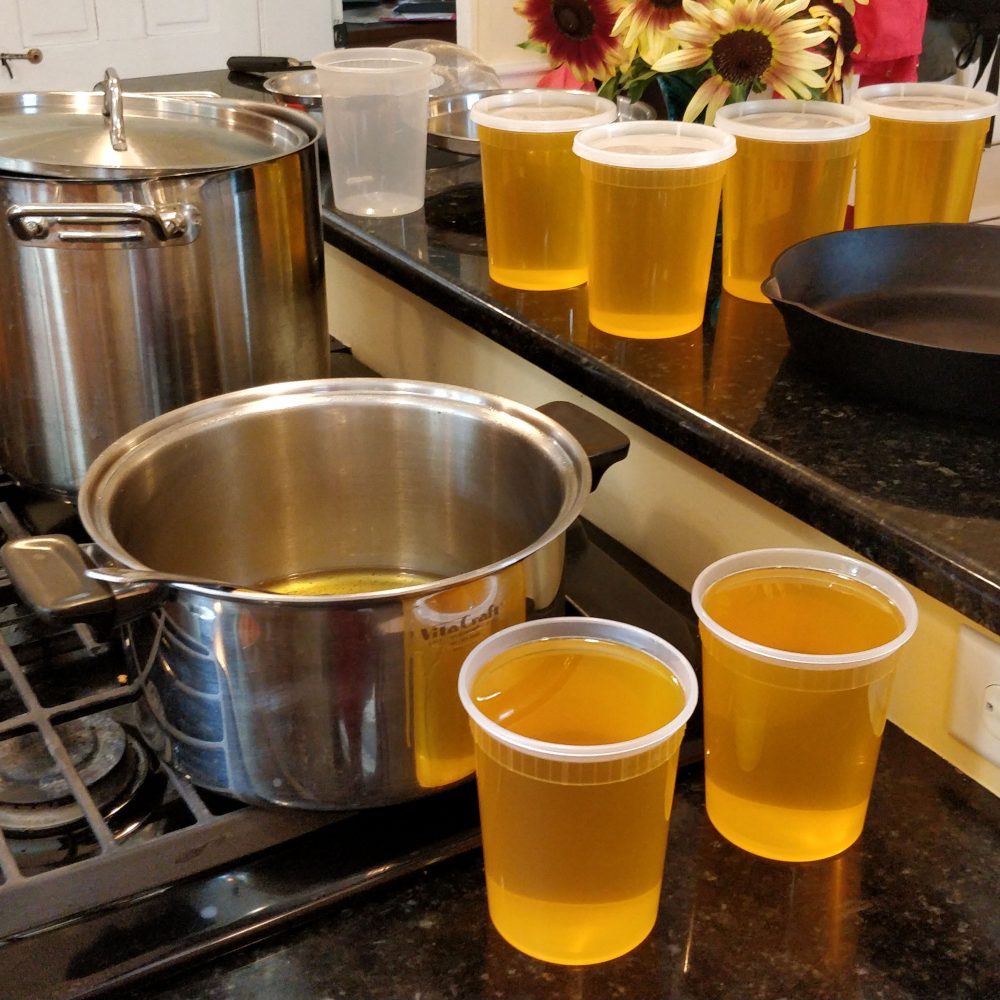
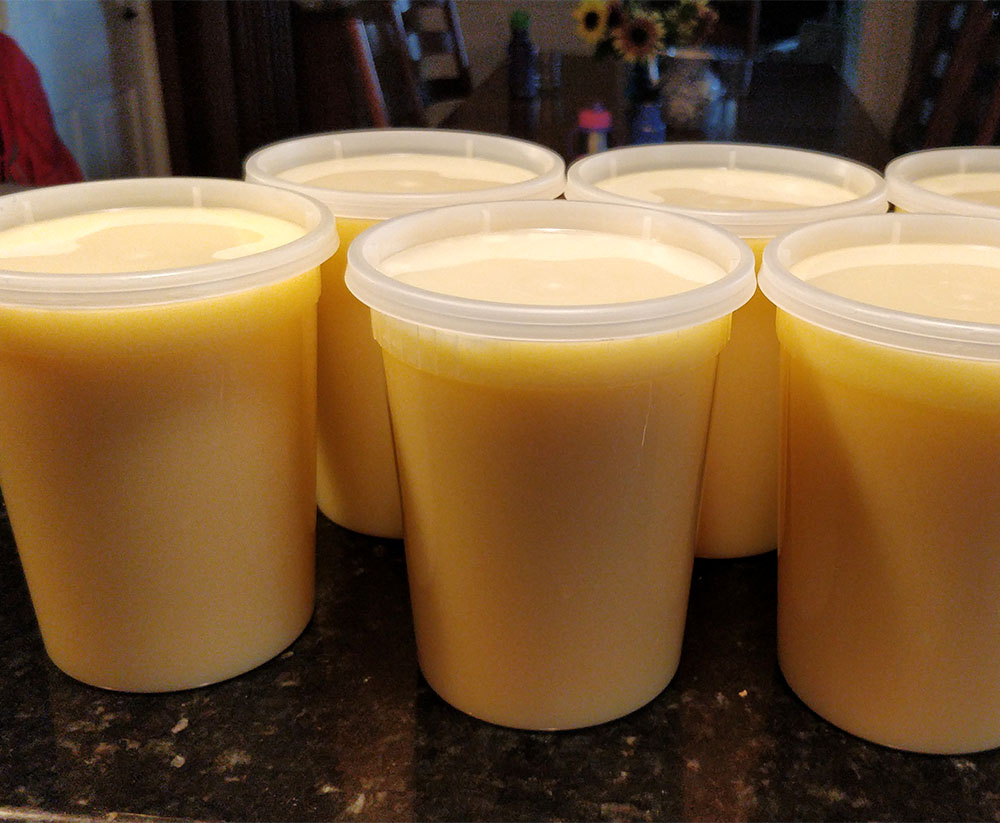
Beef Fat is often seen as a useless product. However, grass fed beef tallow is so healthy and useful that it’s a shame to waste it. We like to save the beef fat from our cattle and render it into grass fed beef tallow.

Beef tallow is a hard saturated fat that is stable at room temperature and has a high smoke point.  This makes it a great option for cooking!

Is beef fat good for you?  Yes it is!   One of the biggest benefits of tallow is how healthy it is.  What are the tallow health benefits? Grass fed beef tallow is high in conjugated linoleic acid, B vitamins, Vitamin K2, Niacin, Selenium, Iron, Phosphorus, potassium and riboflavin.  Since we now know that natural saturated fats are healthy and important, tallow is a great option to use for pan frying vegetables, pan searing steaks and more.  I tend to use it more in savory foods since the flavor profile works well for them.  If you’re going to fry foods the high smoke point of tallow (400 degrees Fahrenheit) makes it ideal.  You can make some excellent french fries or donuts fried in tallow.  French fries and donuts are not the healthiest foods, but if you’re going to make them why not fry them in an oil that is healthy, rather than frying in toxic vegetable oils.

There are many other uses for tallow. You can use it to make soap, candles or salves and balms for skin health.  In fact, send some of our tallow to Lancaster Handcrafted Soap Company to make beautiful artisan soaps.

So how do you render tallow?  First you will need some beef fat, so talk to your local farmer.  Here are great instructions on how to render tallow.  One tip I have learned for rendering tallow is to keep the lid cracked while redering and occassionally check for water droplets on the lid.  If there are still water droplets or you see steam when you lift the lid then the tallow isn’t finished yet.  It’s important to render until all the naturally occurring water is gone from the tallow.  This ensures your tallow will last a long time.

The finished grass fed beef tallow at Firefly Meadows Farm


Filed Under: Uncategorized

12 Reasons to Choose Perennial Pasture Based Agriculture

July 12, 2019 by Josiah Leave a Comment

In the modern world, perennial pasture based agriculture is not the norm.  Here are 10 reasons to choose perennial pasture based agriculture.  It’s better for the consumer, for the land, for the farmer and for the animals.

  1. Better tasting food.  Have you ever tasted grain-finished beef without any seasoning?  No?  Neither have I.  There just isn’t any flavor to taste.  However, pasture raised meats are packed with great flavor!
  2. Nutrient dense food.  Perennial plants build deep root systems allowing the plants (and animals) access to more nutrients and minerals.  This leads to food with a higher nutrient density, keeping your body healthy.
  3. Chemical free food.  Properly managed perennial pastures don’t require synthetic fertilizers, herbicides, pesticides and other toxic chemicals.  This results in food that is safe and healthy to eat.
  4. Less runoff. Remember those deep roots we mentioned earlier?  They help water infiltrate into the soil rather than running off and sending fertility downstream.
  5. Less evaporation.  With perennial pastures soils are always covered which keeps water where it’s supposed to be, in the soil.  This leads to healthier plants and prevents desertification.
  6. Deeper richer soils.  Every year, properly managed perennial pastures build new topsoil.  Massive amounts of carbon are also stored in soil as new topsoil is built.
  7. Increasing soil life.  Remember those chemicals that don’t need to be sprayed anymore?  It turns out the soil comes back to life when toxic sprays are removed.  All kinds of important ecology and critters can live in perennial pasture based systems.
  8. More productive land.  Perennial pasture based agriculture builds soil rather than destroying it.  This leads to higher production on the same amount of land.  It’s almost like free land for farmers who protect the environment!
  9. No need for constant replanting.  Farmers no longer need to replant every year since perennial pasture plants come back year after year on their own. It’s not cheap owning expensive planting equipment, buying seed and replanting each year.
  10. No need for expensive harvesting equipment.  Have you ever priced out a combine?  They’re not cheap (right around half a million dollars), but you won’t need one in a perennial based system.  Your animals can do your harvesting for you.  And they love it!  Just watch a cow out on pasture some time.
  11. It turns out perennial pasture based agriculture can save the farmer a lot of time and money.  In addition to the above time and money savers, the farmer no longer needs to spray and fertilize. No need to buy the sprays and fertilizer either.
  12. Happier animals. Which leads to healthier animals.  Which leads to better productivity and a higher quality product.

I’m sure there are a lot of other reasons to choose perennial pasture based agriculture as well.  Feel free to leave them in the comments below.

Filed Under: Uncategorized

100% Grass-Fed Chickens?

July 5, 2019 by Josiah 14 Comments

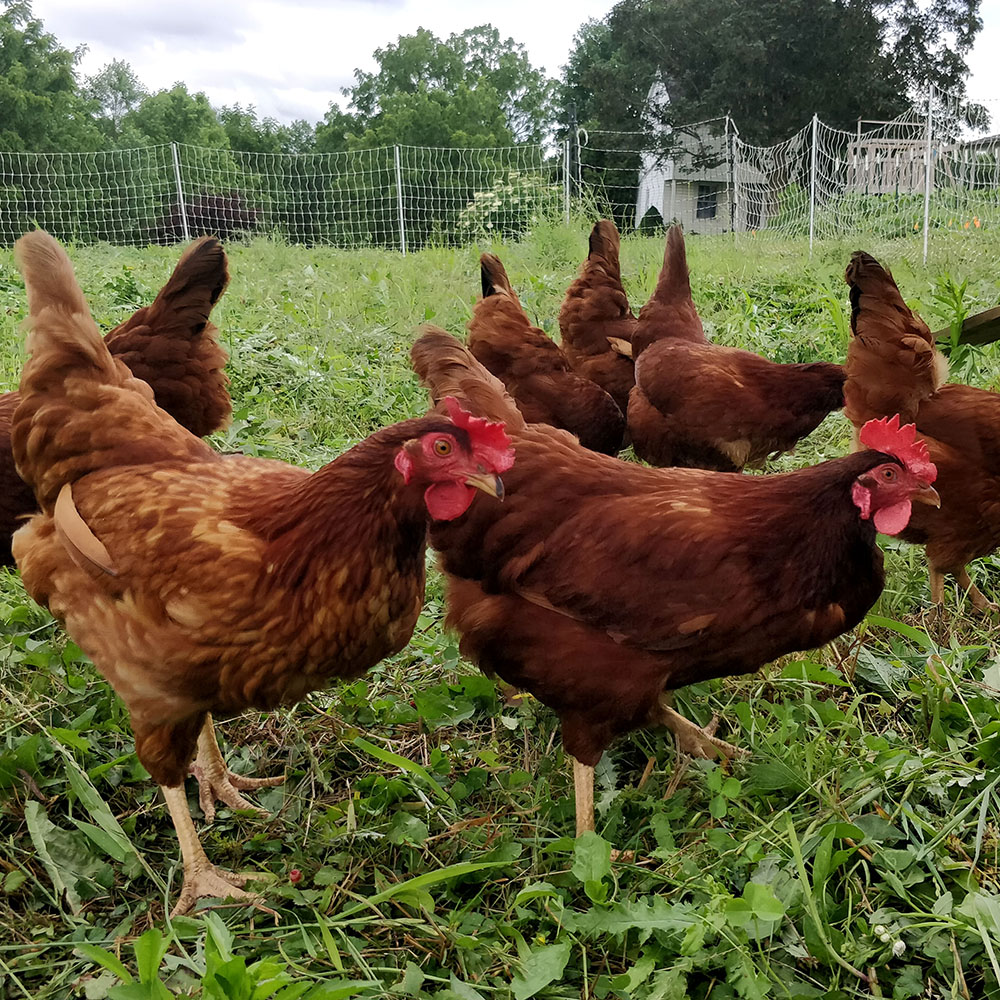
Is there such a thing as a 100% grass-fed chicken?  Hopefully I’m not bursting anyone’s bubble, but there is no such thing as a 100% grass-fed chicken.  It’s a common misconception among consumers that there are pastured chickens that are not fed grain.  When farmers say their chickens are pastured, the chickens are still fed large amounts of grain in their diet.  Could you produce a chicken or eggs without grains?  Possibly, but first we need to understand what a chicken is designed to eat.

Unlike cows and other grazing animals that are designed to only eat plants, chickens are omnivores.  Chickens can eat plants and animals.  Those ‘vegetarian fed’ chickens you see at the grocery store are not a good thing.  Those chickens are probably miserable their entire lives.  A chicken should have access to bugs, meat, pasture, seeds and more.  If you know anyone who has chickens, ask them what a chicken doesn’t eat.  There are actually very few things that a chicken will not eat.  Vegetable scraps, yup, they love ’em.  Meat trimmings and old soup bones, they’ll chase you around for those.  Clover, grass, and weeds?  They eat those as well.  Bugs? They love them.  Mice? They’ll fight over them.

So why is it important for a chicken to be on pasture?  When a chicken is on pasture it has access to all kinds of things it doesn’t have access to when it’s in a cage being fed only grain.  The chicken can select plants, bugs and even occasionally animals to eat that meet it’s nutritional needs and stay healthy.  Another reason we should be concerned about purchasing real pastured chicken or eggs is for the better taste and much higher level of nutrition.   It’s amazing how much more nutritious pastured eggs can be than factory farmed eggs.  When tested, pastured eggs can have levels of certain nutrients 2 or 3 times higher than conventional eggs.

One last thing. You’ve probably seen pastured or cage-free eggs & meat in your supermarket.  Unfortunately, this is usually a marketing scam.  Often the chickens have ‘access’ to pasture, but in reality get almost none of their diet from the pasture.  The result?  Eggs and meat that is nearly identical in nutrition to conventionally raised.  Not good.  Even ‘Organic’ chicken and eggs can have nearly identical nutrient levels to conventional.  It’s not a bad thing for products to be organic since the toxin load will be lower.  However, if the product is raised in the same way, you aren’t necessarily getting any better nutrition.

So what’s the solution?  You need to know how your eggs and meat are raised.  There is no surefire way to tell how an animal was raised by just reading a label.  Go find a farmer and ask him to show you how his animals are raised.  This is the best solution for finding the highest quality food.

I hope this article has been helpful.  If you have any questions or comments, feel free to leave them below?

Filed Under: Uncategorized

« Previous Page
Next Page »

Copyright ©2026 · Firefly Meadows Farm - All Rights Reserved

Copyright © 2026 · Wellness Pro on Genesis Framework · WordPress · Log in